


Quick Summary
Scaling urinalysis requires a shift from manual and semi-quantitative methods to automated, quantitative systems that can handle higher test volumes with consistent accuracy. Urinalysis automation improves throughput by streamlining workflows and reducing reliance on manual interpretation, while also addressing variability that affects diagnostic reliability. Quantitative urinalysis enhances clinical confidence by delivering objective results and minimizing false positives and negatives associated with dipstick testing.
Laboratories face growing pressure to improve urinalysis scale as testing volumes increase and turnaround expectations tighten. Health systems rely on efficient workflows that can handle large sample loads without compromising analytical integrity. Urinalysis automation has emerged as a response to these demands, yet scaling introduces technical and operational challenges that extend beyond instrument capacity.
Manual urinalysis workflows struggle to keep pace with modern laboratory requirements. Variability in technique, dependence on skilled personnel, and delays in processing contribute to inefficiencies that affect both throughput and urinalysis cost. As laboratories seek to align performance with clinical demand, the shift toward automated solutions continues to accelerate.
Quantitative urinalysis plays a central role in this transition. Unlike traditional dipstick testing, which relies on semi-quantitative color interpretation, quantitative systems generate objective numerical values. This distinction influences diagnostic confidence, repeat testing rates, and overall laboratory productivity.
Understanding Urinalysis Scale in Modern Laboratories
Urinalysis scale refers to the ability of a laboratory to process increasing test volumes while maintaining consistent analytical quality. Scaling requires alignment between instrumentation, staffing, and workflow design. Laboratories that operate at high capacity must manage sample intake, analysis, and reporting without introducing delays or inconsistencies.
Traditional workflows often limit scalability due to manual steps in sample preparation and interpretation. Microscopic examination demands trained personnel and introduces variability between operators. These constraints affect both speed and reproducibility, which can lead to bottlenecks during peak testing periods.
Automation addresses these limitations by standardizing processes and reducing manual intervention. However, not all automated systems deliver the same level of analytical performance. Laboratories must evaluate how technology contributes to both throughput and result reliability when considering the urinalysis scale.
Urinalysis Automation and Its Impact on Throughput
Urinalysis automation transforms laboratory operations by integrating sample handling, analysis, and data reporting into a unified workflow. Automated analyzers can process significantly higher sample volumes compared to manual methods, with some systems capable of analyzing hundreds of specimens per hour.
High-throughput capability reduces turnaround time and allows laboratories to manage fluctuating workloads more effectively. Automated systems also minimize idle time between tests, which increases overall productivity. In high-volume environments, this efficiency translates into faster clinical decision-making.
Automation reduces reliance on manual microscopy, which remains labor-intensive and time-consuming. Digital imaging and advanced detection technologies classify urinary particles with greater consistency. These capabilities reduce inter-operator variability and contribute to more reproducible results.
However, throughput alone does not define effective scaling. Laboratories must balance speed with analytical accuracy. Systems that prioritize volume without maintaining data quality may introduce downstream inefficiencies, including repeat testing and diagnostic uncertainty.
Limitations of Dipstick Testing in Scaled Environments
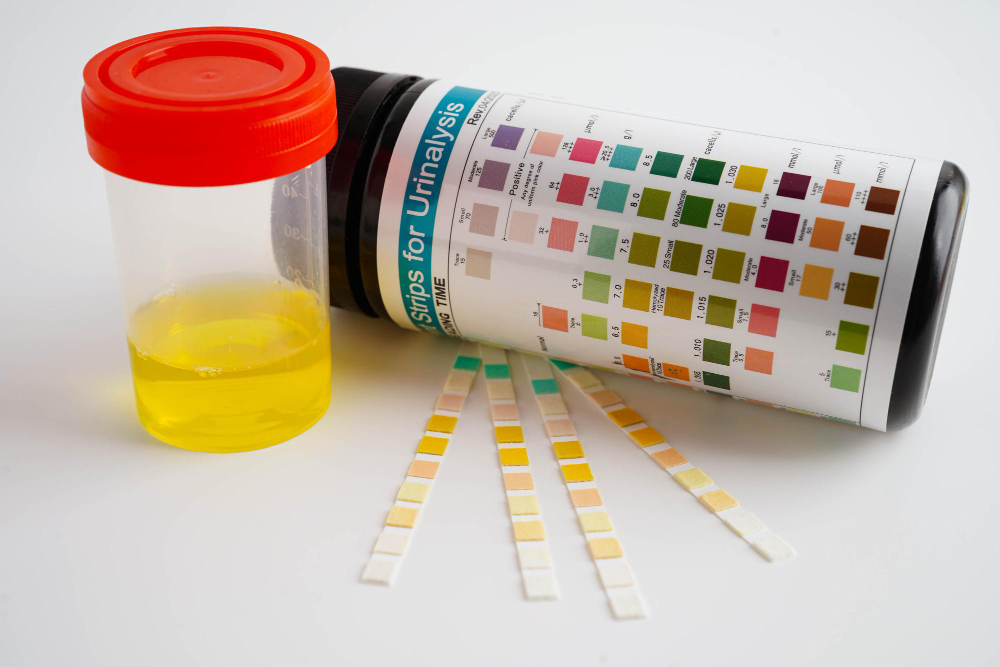
Dipstick urinalysis remains widely used due to its simplicity and low initial cost. However, its semi-quantitative nature introduces limitations that become more pronounced at scale. Colorimetric interpretation depends on visual assessment, which can vary between operators and lighting conditions.
Chemical interferences further affect dipstick accuracy. Substances such as ascorbic acid can mask the presence of glucose or blood, leading to false-negative results. Variations in urine concentration, pH, and temperature also influence test outcomes. These factors reduce reliability in high-throughput settings where consistency is required.
False positives and false negatives carry operational and clinical implications. Inaccurate results may trigger unnecessary follow-up testing or delay appropriate intervention. Over time, these inefficiencies contribute to increased urinalysis costs and reduced confidence in laboratory data.
Advancing Urinalysis Scale with Quantitative Systems
Quantitative systems address many of the limitations associated with dipstick testing. By generating numerical measurements, these systems eliminate subjective interpretation and enhance analytical precision. Laboratories can standardize result reporting across different operators and sites.
The AutoUA® system represents a distinct approach to quantitative urinalysis. It is the only FDA-cleared system designed to replace dipstick testing with quantitative analysis. This regulatory status reflects adherence to established standards for analytical performance and clinical application.
Analyzer-agnostic compatibility allows our system to integrate with leading clinical analyzers. Laboratories can adopt quantitative workflows without replacing existing infrastructure. This flexibility supports scalable implementation across diverse laboratory environments.
Quantitative results also contribute to improved clinical interpretation. Physicians can assess trends over time with greater accuracy, which supports more informed decision-making. This level of detail enhances diagnostic clarity and reduces ambiguity in patient management.
Throughput Optimization Beyond Instrument Capacity
Scaling urinalysis involves more than increasing analyzer speed. Laboratories must consider the entire workflow, including sample collection, transport, and data management. Bottlenecks can occur at any stage, limiting overall throughput despite advanced instrumentation.
Automated systems streamline sample processing by reducing manual handling steps. Integrated workflows allow continuous operation, which supports higher daily test volumes. Laboratories can maintain consistent performance during peak demand periods without overextending staff resources.
Data integration also plays a significant role in throughput optimization. Automated reporting systems reduce transcription errors and accelerate result delivery. Laboratory information systems can interface directly with analyzers, which enhances efficiency and data integrity.
Staff allocation shifts as automation expands. Personnel can focus on complex analytical tasks rather than routine processing. This redistribution of labor contributes to operational efficiency and supports sustainable scaling.
Urinalysis Cost Considerations in Scaling Strategies
Urinalysis cost extends beyond the price of consumables and instrumentation. Laboratories must evaluate the total cost of ownership, which includes labor, maintenance, and repeat testing. Manual workflows often carry hidden costs related to inefficiency and variability.
Automation introduces a higher initial investment, yet it can reduce long-term expenses. Lower labor requirements and improved accuracy decrease the frequency of repeat tests. These factors contribute to more predictable operational costs over time.
Quantitative systems further influence cost dynamics by reducing diagnostic uncertainty. Accurate results at the first point of analysis limit the need for additional testing. This efficiency aligns laboratory performance with financial sustainability.
Reimbursement considerations also play a role. Quantitative data may support more robust documentation of clinical findings. Laboratories that adopt advanced analytical methods can align their services with evolving healthcare reimbursement models.
Regulatory and Quality Considerations in Automation
Regulatory compliance remains a central factor in laboratory operations. The AutoUA® system holds FDA clearance, which indicates that it meets established requirements for safety and effectiveness. This designation reinforces confidence in its analytical performance.
ISO certification further reflects adherence to international quality standards. Laboratories that adopt systems with recognized accreditations can align their operations with regulatory expectations. This alignment supports consistent quality across testing processes.
Quality assurance programs benefit from automated systems that deliver reproducible results. Standardization reduces variability and facilitates internal and external quality assessments. Laboratories can maintain consistent performance metrics as testing volumes increase.
Balancing Innovation with Practical Implementation
Scaling quantitative urinalysis requires careful planning and evaluation. Laboratories must assess their current workflows, test volumes, and resource allocation. Technology adoption should align with operational goals and clinical requirements.
Automation introduces opportunities for innovation, yet implementation must remain practical. Systems that integrate with existing infrastructure allow a gradual transition without disrupting ongoing operations. This approach supports continuity while advancing analytical capabilities.
Training and adaptation also influence successful scaling. Laboratory personnel must understand new workflows and technologies. Clear protocols and ongoing education contribute to effective system utilization.
Positioning Laboratories for Sustainable Growth
Laboratories that adopt quantitative, automated urinalysis systems position themselves for long-term growth. Increased throughput, improved accuracy, and controlled urinalysis cost create a foundation for scalable operations. These factors align laboratory performance with the evolving demands of modern healthcare.
The transition from manual and semi-quantitative methods to fully quantitative analysis reflects a broader shift toward data-driven diagnostics. Laboratories that embrace this shift can enhance both operational efficiency and clinical value.
Advance Your Urinalysis Scale Today
The AutoUA® system delivers FDA-cleared quantitative urinalysis designed to replace dipsticks while integrating with leading analyzers to improve accuracy and workflow efficiency. Contact us to learn how we can transform your laboratory’s approach to urinalysis scale and long-term cost management.
FAQs
Urinalysis scale refers to a laboratory’s ability to handle increasing test volumes while maintaining consistent accuracy and efficiency. It involves optimizing workflows, adopting automation, and integrating technologies that reduce manual intervention. Effective scaling allows laboratories to process more samples without compromising turnaround time or analytical quality.
Urinalysis automation increases throughput by reducing manual steps in sample handling, analysis, and reporting. Automated systems can process large volumes of samples continuously, which shortens turnaround time. They also reduce variability in interpretation, allowing laboratories to maintain consistent performance even during periods of high demand.
Quantitative urinalysis delivers numerical results, which removes subjectivity associated with color-based dipstick interpretation. It reduces the likelihood of false positives and false negatives caused by interference or human error. This approach improves diagnostic accuracy and allows clinicians to monitor changes in patient condition with greater precision.
Automation can increase initial costs due to equipment investment, but it often reduces long-term urinalysis cost. Lower labor requirements, fewer repeat tests, and improved efficiency contribute to more predictable operational expenses. Over time, these factors can offset the upfront investment and improve overall cost management.