


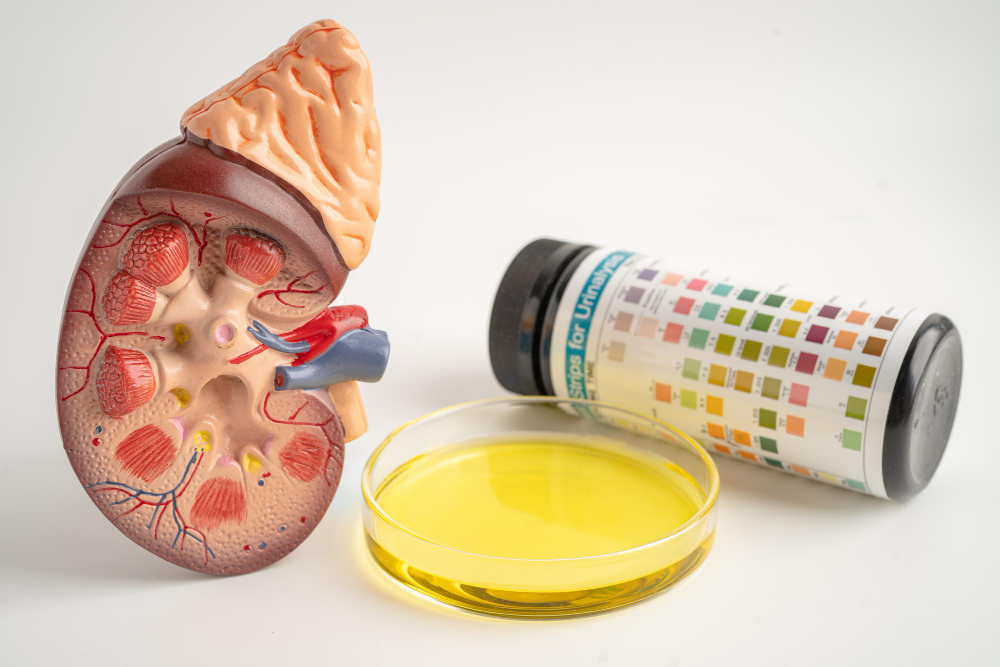
Quick Summary
Multimodal diagnostics integrate laboratory, imaging, and clinical data to improve diagnostic accuracy and interpretation of complex conditions. Quantitative urinalysis strengthens the urinalysis report by replacing dipstick variability with precise measurements, improving analytical sensitivity and specificity. This supports more reliable data integration and enhances consistency across diagnostic workflows, contributing to more accurate clinical decision-making in diagnostic care.
Healthcare systems are shifting toward multimodal diagnostics to improve how diseases are detected, classified, and monitored. By combining laboratory data, imaging, and clinical parameters, these models create a more complete view of patient health. Within this framework, the urinalysis report has gained renewed importance, particularly as laboratories move beyond traditional dipstick methods.
Multimodal diagnostics rely on integrating diverse datasets into a unified interpretation. This approach addresses the variability and limitations seen in single-test strategies. Urine, as a non-invasive biofluid, offers valuable biochemical insights that complement blood-based and imaging findings. When analyzed quantitatively, it adds measurable precision that strengthens diagnostic interpretation.
At present, quantitative urinalysis introduces a higher level of analytical depth compared to semi-quantitative dipstick testing. Instead of relying on subjective colorimetric interpretation, it delivers numeric values that align with modern laboratory standards. This shift supports more consistent urinalysis report outputs and improves alignment with integrated diagnostic systems.
The Role of Multimodal Diagnostics in Modern Laboratory Medicine
Multimodal diagnostics combine multiple sources of clinical data into a single interpretive framework. These systems frequently incorporate laboratory biomarkers, imaging modalities, and patient-specific variables. The goal is to reduce diagnostic uncertainty and improve the reliability of clinical decisions.
Traditional diagnostic workflows often depend on isolated measurements. While useful, these methods may overlook complex biological interactions. Multimodal approaches address this limitation by correlating findings across systems. For example, urinary biomarkers can reflect metabolic or systemic changes that imaging alone may not capture.
Quantitative urinalysis plays a complementary role in this model. It contributes structured data that integrates well with algorithm-driven analysis. As machine learning tools become more common in healthcare, standardized numeric outputs from urine testing enhance compatibility with predictive models.
Analytical Sensitivity in Multimodal Diagnostics and Urinary Biomarkers
Analytical sensitivity refers to the ability of a test to detect low concentrations of a substance. In urinary biomarker assays, this parameter determines how effectively early or subtle physiological changes are identified.
Dipstick urinalysis has inherent sensitivity limitations. Its semi-quantitative nature restricts detection thresholds and introduces variability based on visual interpretation. External factors such as urine concentration, pH, and interfering substances can also affect results. These constraints may lead to missed abnormalities in early-stage conditions.
Quantitative urinalysis improves analytical sensitivity by using calibrated measurement techniques. It detects smaller changes in biomarker levels and translates them into precise values. This capability strengthens the urinalysis report by capturing data that might otherwise remain undetected.
In multimodal diagnostics, higher sensitivity enhances the overall dataset. When combined with other modalities, even minor biomarker fluctuations can influence diagnostic algorithms. This leads to earlier identification of disease patterns and more informed clinical pathways.
Analytical Specificity and Its Impact on Diagnostic Accuracy
Analytical specificity describes how well a test distinguishes the target analyte from other substances. In urinary testing, specificity affects the rate of false-positive results.
Dipstick methods are prone to cross-reactivity. For instance, certain medications or dietary components can trigger misleading readings. This lack of specificity can complicate interpretation and reduce confidence in the urinalysis report.
Quantitative urinalysis addresses this issue by employing more controlled detection mechanisms. These systems differentiate analytes with greater precision, reducing interference from unrelated compounds. As a result, clinicians receive clearer data that aligns more closely with the patient’s physiological state.
Within multimodal diagnostics, improved specificity strengthens data integration. When each input source maintains high analytical integrity, the combined output becomes more reliable. This enhances diagnostic clarity and supports consistent decision-making across clinical teams.
Limitations of Dipstick Testing in Integrated Diagnostic Models
Dipstick urinalysis has served as a convenient screening tool for decades. However, its limitations become more apparent in advanced diagnostic frameworks.
The reliance on colorimetric interpretation introduces subjectivity. Even with standardized charts, variations in lighting and human perception can affect readings. Additionally, dipsticks generate categorical results rather than continuous data, which restricts their usefulness in data-driven models.
Environmental and physiological factors further complicate dipstick performance. Dilute or highly concentrated urine samples can alter results. Certain compounds may mask or mimic target analytes, leading to inconsistencies.
In contrast, quantitative systems deliver reproducible measurements. They reduce variability and align with the precision required for multimodal diagnostics. This transition reflects a broader movement toward data standardization in laboratory medicine.
Enhancing the Urinalysis Report Through Data Integration
A modern urinalysis report extends beyond isolated values. It serves as a component of a larger diagnostic ecosystem. When quantitative data is incorporated, the report becomes more informative and actionable.
Numeric outputs allow for trend analysis over time. Clinicians can track subtle changes and correlate them with other diagnostic findings. This longitudinal perspective supports more accurate disease monitoring.
Integration with electronic health records and analytical platforms further expands the utility of the urinalysis report. Quantitative results can be seamlessly incorporated into predictive models and clinical dashboards. This improves workflow efficiency and facilitates real-time decision-making.
As multimodal diagnostics continue to evolve, the quality of individual data inputs becomes increasingly important. Quantitative urinalysis strengthens this foundation by delivering consistent and interpretable results.
The Role of Analyzer-Agnostic Systems in Multimodal Diagnostics
Laboratories operate within diverse technological environments. Compatibility across platforms is a key consideration when adopting new diagnostic tools.
Analyzer-agnostic systems allow quantitative urinalysis to integrate with existing laboratory infrastructure. This flexibility supports broader implementation without requiring extensive equipment changes. It also enables laboratories to maintain operational continuity while upgrading diagnostic capabilities.
In multimodal diagnostics, interoperability is particularly valuable. Data from different sources must be combined efficiently to generate meaningful insights. Systems that function across multiple analyzers facilitate this process and reduce integration barriers.
This adaptability contributes to more cohesive diagnostic workflows. It aligns laboratory operations with the increasing demand for interconnected data systems in healthcare.
Advancing Clinical Decision-Making Through Quantitative Integration
The integration of quantitative urinalysis into multimodal diagnostics influences how clinicians interpret patient data. By combining precise urinary measurements with other diagnostic inputs, healthcare providers gain a more comprehensive understanding of disease processes.
Improved analytical sensitivity and specificity translate into more reliable results. This reduces ambiguity and supports clearer clinical pathways. Over time, consistent data quality contributes to better-informed treatment strategies.
As healthcare continues to adopt data-driven approaches, the role of quantitative diagnostics will expand. Urinalysis, when integrated effectively, becomes more than a routine test. It becomes a meaningful contributor to advanced diagnostic care.
Shaping the Future of Diagnostic Care
The transition from traditional methods to integrated systems marks a significant shift in laboratory medicine. Quantitative urinalysis aligns with this progression by delivering precise, standardized data that complements other diagnostic modalities.
Multimodal diagnostics represent a forward-looking approach to patient evaluation. By combining diverse data sources, these systems create a more accurate and nuanced understanding of health conditions. Quantitative urinalysis strengthens this model through its ability to generate reliable and reproducible measurements.
As laboratories continue to modernize, the integration of advanced urinalysis techniques will play an expanding role in shaping diagnostic care. This evolution reflects a broader commitment to urinalysis diagnostic accuracy, consistency, and improved patient outcomes.
Modernize Urinalysis for Integrated Diagnostics
Upgrade your laboratory with the AutoUA® system, an FDA-cleared, analyzer-agnostic solution designed to replace traditional dipsticks with quantitative precision. Contact us to learn how we can strengthen your role in multimodal diagnostics and modern urinalysis reporting.
FAQs
Quantitative urinalysis offers standardized numeric biomarker data that integrates with imaging and clinical inputs. This improves consistency across multimodal systems and supports more accurate diagnostic interpretation.
It replaces subjective dipstick readings with objective values, enabling better reproducibility, clearer trends, and more reliable integration into digital health systems.
Higher analytical sensitivity allows detection of lower biomarker levels, supporting earlier identification of disease-related changes and improving diagnostic accuracy.
Greater analytical specificity reduces interference from non-target substances, lowering false positives and improving confidence in combined diagnostic results.